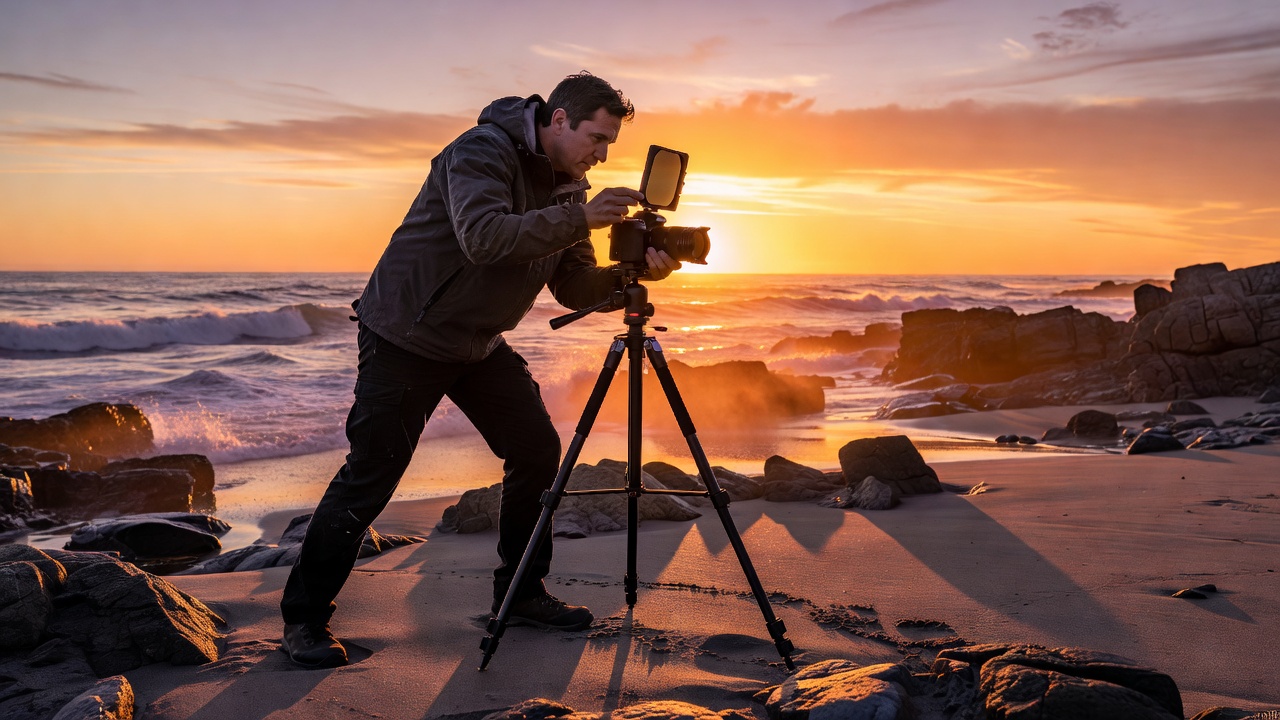
Name the lighting problem first
"I need lights" usually means one of four things. The light is too hard, giving sharp shadows and squinting subjects. The light is too uneven, with a bright sky and a dark foreground. The light is too weak, forcing high ISO or slow shutter speeds. Or the light is too bright for the creative choice you want, such as a wide aperture at noon or blurred water in daylight.
Only the third problem truly calls for adding light. The first is a diffusion job, the second a filtration or reflection job, and the fourth a neutral density job. Getting this right saves money, weight and setup time, and it often produces more natural pictures because the light keeps its original character.
Modifiers that pack small
A collapsible reflector is one of the most useful accessories per gram you can carry.
5-in-1 reflector
White, silver, gold, black and a translucent diffuser in one disc. White fills gently; silver punches; black removes light to add shape.
Scrim or diffusion panel
Held between sun and subject, it turns harsh midday light into soft open shade for portraits and flowers.
Clamp and stand
A reflector holder or a light stand frees your hands when you work without an assistant.
Editorial comparison: adding light
Ratings are qualitative editorial judgements for typical units in each category.
| Light | Power | Portability | Learning curve | Compatibility to check | Best for |
|---|---|---|---|---|---|
| On-camera speedlight | Medium | High | Medium | Dedicated TTL hot shoe contacts; Sony uses its Multi Interface Shoe | Events, bounce flash, fill outdoors |
| Off-camera speedlight kit | Medium | High | High | Radio trigger protocol across flashes, such as Godox X system | Location portraits |
| Battery strobe | High | Medium | High | Modifier mount, for example Bowens S-type or Profoto | Overpowering sun, larger groups |
| LED panel | Low to medium | High | Low | CRI or TLCI rating, battery type such as NP-F | Video, what-you-see stills |
| LED COB light | Medium to high | Medium | Medium | Mains or V-mount power, Bowens mount | Interviews, product video |
Colour quality matters for LEDs: a high CRI or TLCI rating means skin tones and products render with fewer colour casts.
Filters: changes no software can fully make
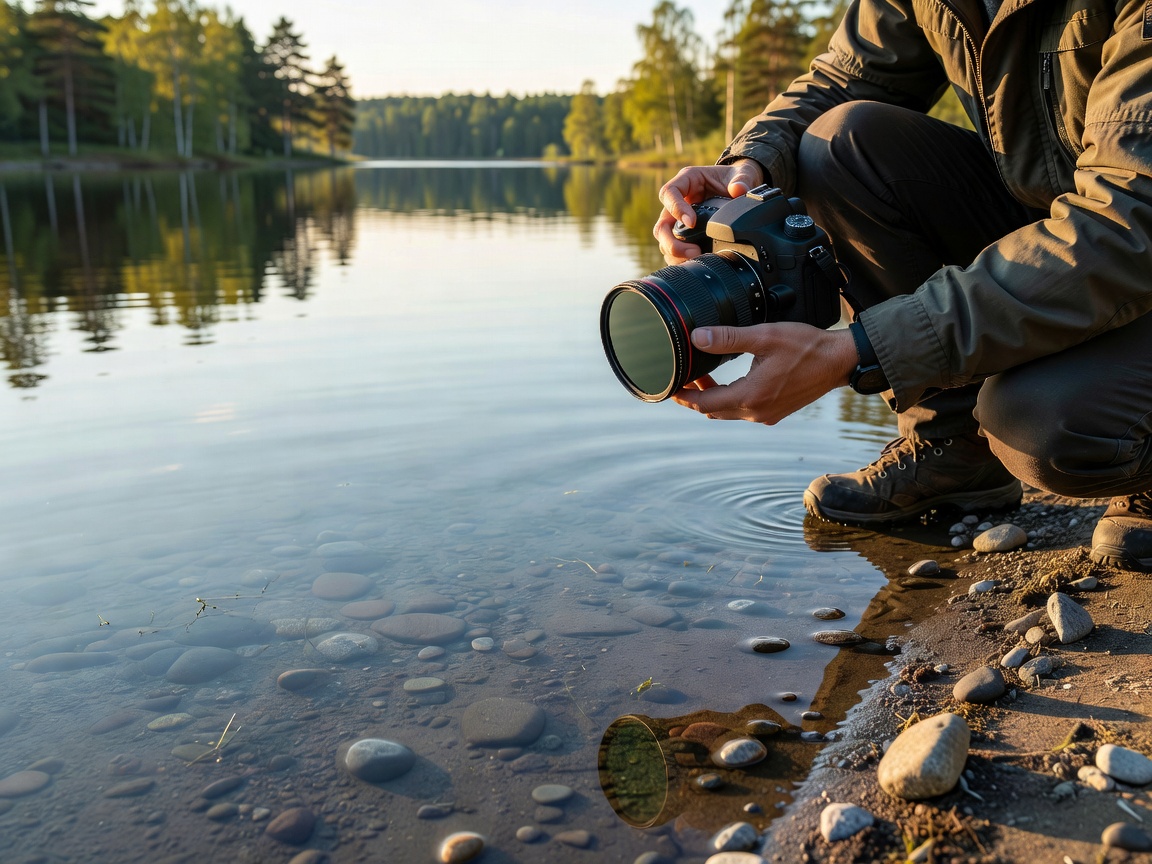
A circular polariser cuts reflections from water, glass and wet leaves and deepens blue skies at angles roughly perpendicular to the sun. It costs about one to two stops of light. It can produce uneven sky darkening on very wide lenses, so check the edges.
A neutral density filter reduces light evenly. ND8 is three stops, ND64 six stops and ND1000 about ten stops. Three stops helps with wide apertures in bright light or video shutter angles; ten stops turns moving water and clouds into smooth texture.
A graduated ND darkens only part of the frame, usually the sky. Exposure blending can replace it in many scenes, but it still helps with moving subjects where bracketing struggles.
Filter compatibility checklist
- Thread size in millimetres for each lens, often marked with ⌀
- Step-up rings to share one filter across lenses, using the largest diameter
- Slim mounts on wide lenses to avoid vignetting
- Square systems, commonly 100 mm, from makers such as Lee Filters and NiSi
- Dedicated holders for bulbous ultra-wide fronts
- Lens hood compatibility once the filter is fitted
- Coated glass from brands such as B+W or Hoya resists flare and smudges
- Neutral colour: cheaper strong NDs may shift colour
- A rigid case that fits a bag pocket
Selection tree: modify, filter or add?
Is the light too hard on your subject?
Use a diffuser between sun and subject, or move to open shade. Add a white reflector for gentle fill.
Is the sky too bright for the foreground?
The scene is static
Bracket and blend, or use a graduated ND if you prefer a single frame.
Things are moving: waves, people, branches
A graduated ND on a square system handles this in one exposure.
Is there too much light for your creative choice?
An ND filter: three stops for wide apertures or video, six to ten stops for long exposures. Pair it with a tripod and a remote.
Is there simply not enough light?
Start with one speedlight bounced off a wall or ceiling. Move to off-camera flash or LED panels once bounce no longer reaches.
When extra lighting adds little
If you shoot landscapes, an LED panel rarely earns its weight. If you shoot street photography, an on-camera flash changes how people respond to you. And if your subject sits near a large window, a reflector and a black card often outperform a starter strobe kit. Buy the light that solves the problem you face regularly, not the one that looks best in a kit photo.